
MVP features artists and their favorite albums.
This week, East to West gets deep and personal with her favourite album of all time.
When Eloise first suggested the idea of a feature that revealed the immense relationship between blogger and pivotal album, I knew straight away which album it would be. Naturally I think only such a deep connection can be formed during the emotionally draining and self-evolving years of adolescence. For some, youthful exploration and confusion become the foundations which bridge the search for answers to the tales and tribulations of those that have gone before. And in the misunderstood and somewhat misinformed times of youth, the power that music has to speak to the searching mind is at its strongest. One’s tastes and one’s perceptions always mirror one’s internal evolution, and, after all the Avril and Kylie Minogue, the brief Aussie punk stage (cringe), and the even longer indie rock stage, I discovered Seekae.
Seekae was my gateway drug—it opened the door to the essence of experimentation and an entire scene I’d never before been able to fathom. Their debut album, The Sounds of Trees Falling on People, was released in 2008. However it wasn’t until 2009—during my second last year of high school—that I stumbled upon it. People find it pretty funny when I tell them Seekae was my gateway into electronic music—that this small, humble, Sydney trio could teach me what the organic nature of electronica meant. That in itself is a pretty wild notion.
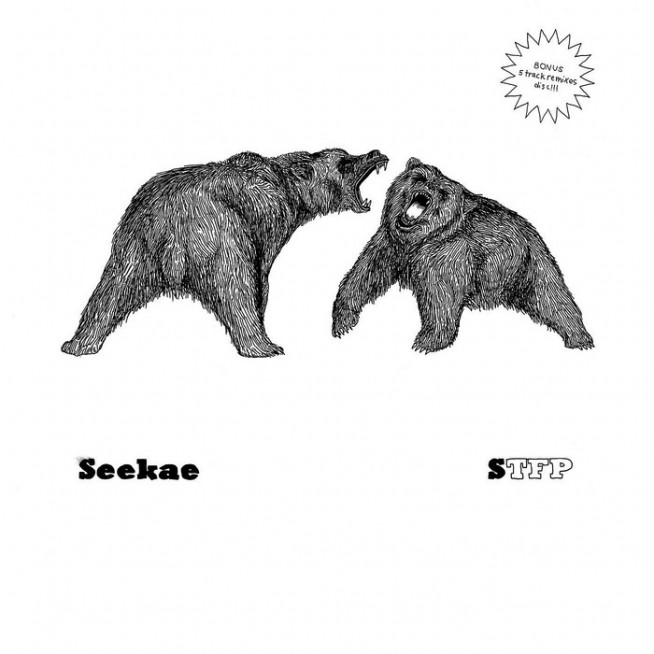
I’m not going to sit here in reflective quiet and dwell on or whine about how hard it was growing up—the overwhelming emotions, the inability to cope, the immense highs and the crushing lows—because as I get older, I understand that I wasn’t the only one who had these despondencies, these experiences. In the depths of what seemed like isolated despair, The Sounds of Trees was my solace, my friend. With each ricocheting beat reflected my turmoil, each ascending nuance imparted some hope. In these tumultuous times and as a teen that had always valued lyrics in music above all else, I find it interesting that I fell deeply and irrevocably in love with an ambient and almost lyric-less album. Before then, it had always been about finding the most poignant lyrics, which spoke my internal stories, sung my anguished pains. I think after the longest of times I moved on from having my stories written by others and decided to lay down my own lines.
Perhaps that’s part of why The Sound of Trees still resonates within me as strongly as ever—with 18 tracks spanning just over one hour, I rarely make my way through just a half of the album. To sit down and fully appreciate it, to really listen to it, you discover something new every time—an unheard sound, an interesting inflection, an experimental use of percussion. And with each new discovery, another part of the story begins to write itself. Not only was this album the background for one of the most emotional times of my life, in retrospect it also laid the foundations in shaping what my blog, East to West, has become, and in turn, shaping the past two years of my life. Like any powerful gateway drug, I became addicted to Australian electronica and just wanted an obscene amount of it so that I would never come down. Through Seekae, I discovered the fantastic side-projects of Alex, George and John, and started to work my way through Peon, Vorad Fils, Hensen, and the entire Oneofour Collective. I discovered labels I’d never heard of, sounds I never knew existed and types of hardware I still can’t pronounce the names of.
Perhaps though, a somewhat deterring reality of the matter is the way in which my musical admiration is mistaken for “groupieism.” Of course I won’t deny my admiration of Seekae and the talented minds behind it, nor the perpetuation of my so-called undying love by my friends and myself, but why is it that a woman with such a passion cannot be extricated from that word? It is indeed possible to be thankful for someone’s talents and creations, without wanting to take them home and check them off your list. In any quest of spiritual fulfillment there will always be questioning minds looking in. I’ve learned though, in some sense, you have to block them out.
I guess in deep and unnerving retrospect, I’ve realized that this record has led me on a path, which has done, and continues to, teach me a hell of a lot. So much so, I don’t think I am even near processing just half of it. Musically, it has taught me just how far you can push electronic music and how you can craft it to sing the most intense of feelings and to reflect the most internal of desires. It showed me the accessibility in intelligently crafted electronica, which wasn’t just straight up, Top 40, “party bangers.” Creatively, through this introduction into a beautiful world of soaring soundscapes and otherworldly sounds, it has provided me with a wonderfully blank journal, which has given me unfathomable space to extend thoughts and stories, however inarticulately, in whichever direction they may lead.
Even three years later, “Void” still brings tears to my eyes. I saw Seekae play recently, for the first time in about six months at the Sydney Opera House. After having seen them perform in everything from backyards to medium sized venues to festival stages, it was an immensely surreal experience. As I looked around at the other 30 or so people sitting enraptured in the front row, instead of seeing strangers I saw talented friends, a future lover, colleagues, a guy I met at a party, who, jokingly (or not so jokingly) referred to himself as “number one Seekae fanboy,” and, most importantly, my best friend. As she sat next to me, holding my hand tightly as tears sprang to my eyes and shivers danced along my spine, it was in that moment that I realized just how far I, like Seekae, had come. Here I was, exactly where I wanted to be—far away from the sad and lost 16-year-old who still, at times, plagues my subconsciousness—and right next to the beautiful person who had shared it all with me.
A couple of weeks ago another friend asked me which Seekae album was my favourite—their first, The Sound of Trees or their second, released in 2011, +Dome. I responded, as always, the same—that their first was, and potentially always will be, my favourite. This, to everyone, is always a shock as +Dome is beautifully polished, more skilfully technical and as a whole, has a remarkable sense of cohesion. Comparatively, The Sound of Trees is a little disjointed, a little bit sloppy, and still very much developing the precision of skill and sound as seen in Seekae’s later work. Over the next few days, I did listen more or less to the two albums back to back and for the first time ever agreed that, yes, +Dome is better—but hey, it will still never be my favourite. No matter what, it’s those emotions and projected nostalgias that we impart on albums or songs which will always mark them closer to our hearts than others. And, like a true friend, The Sound of Trees has been there with me through it all. And so she will continue to be forever next to me, watching in quiet reflection, serenely holding my hand.
-
Laura
-
Godly_Drukqs_Bro
-
Rebecca