

Storytellers: Beat Culture

 Posted under:
Beneath the pop harmonies and synth-laden lulls, Beat Culture strikes a sensitive note. In the latest edition of Storytellers, the young American whisks us away with more than just his perfectly crafted songs. Come with him, and us, on a journey to Indio.
Let the pilgrimage begin.
The official website for the city of Indio, California boasts a photo with three young adults pasted, via Photoshop, in front of a “teen center,” a basketball hoop, a palm tree, and an ambiguous blue swirl that maybe represents the wind or the ocean, neither of which exist there because it’s a desert. “The place to be,” the banner at the top says.
I realized it was the place to be when one night I looked to my left and saw a sweaty, bearded man weeping as his childhood hero played “Two Headed Boy, pt. 2” against a backdrop of unfiltered desert sundown.
Let’s call him “Bob.” He could be anyone, but let’s call him Bob.
Bob is in Indio. Not for the teen center or the basketball hoop or the palm trees, but for a very specific reason: the Coachella Valley Music and Arts Festival.
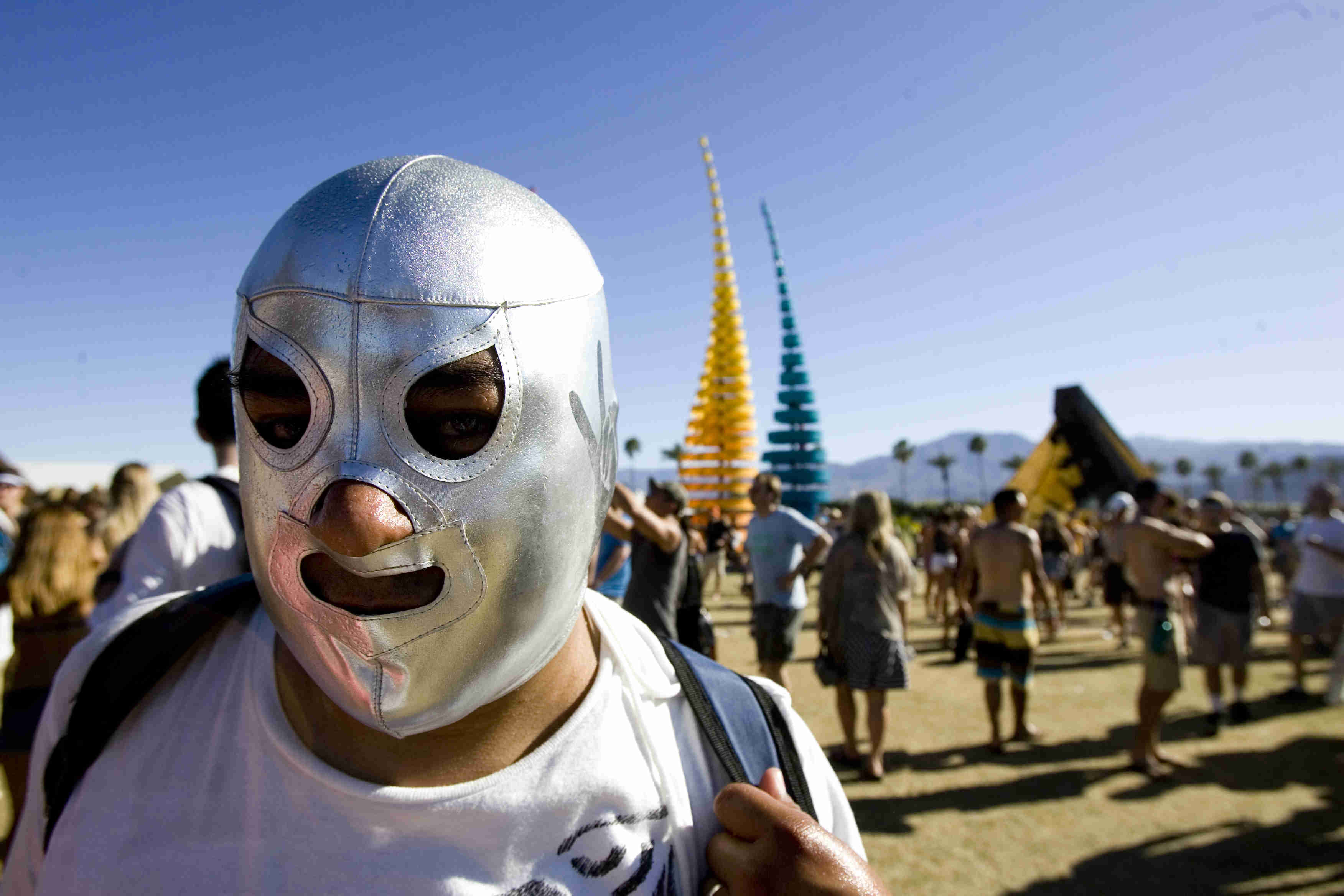
Located in Indio itself, at the “Empire Polo Club,” Coachella draws roughly eighty thousand music fans from all over the world. It’s a three-day pilgrimage—an aural Mecca of sorts.
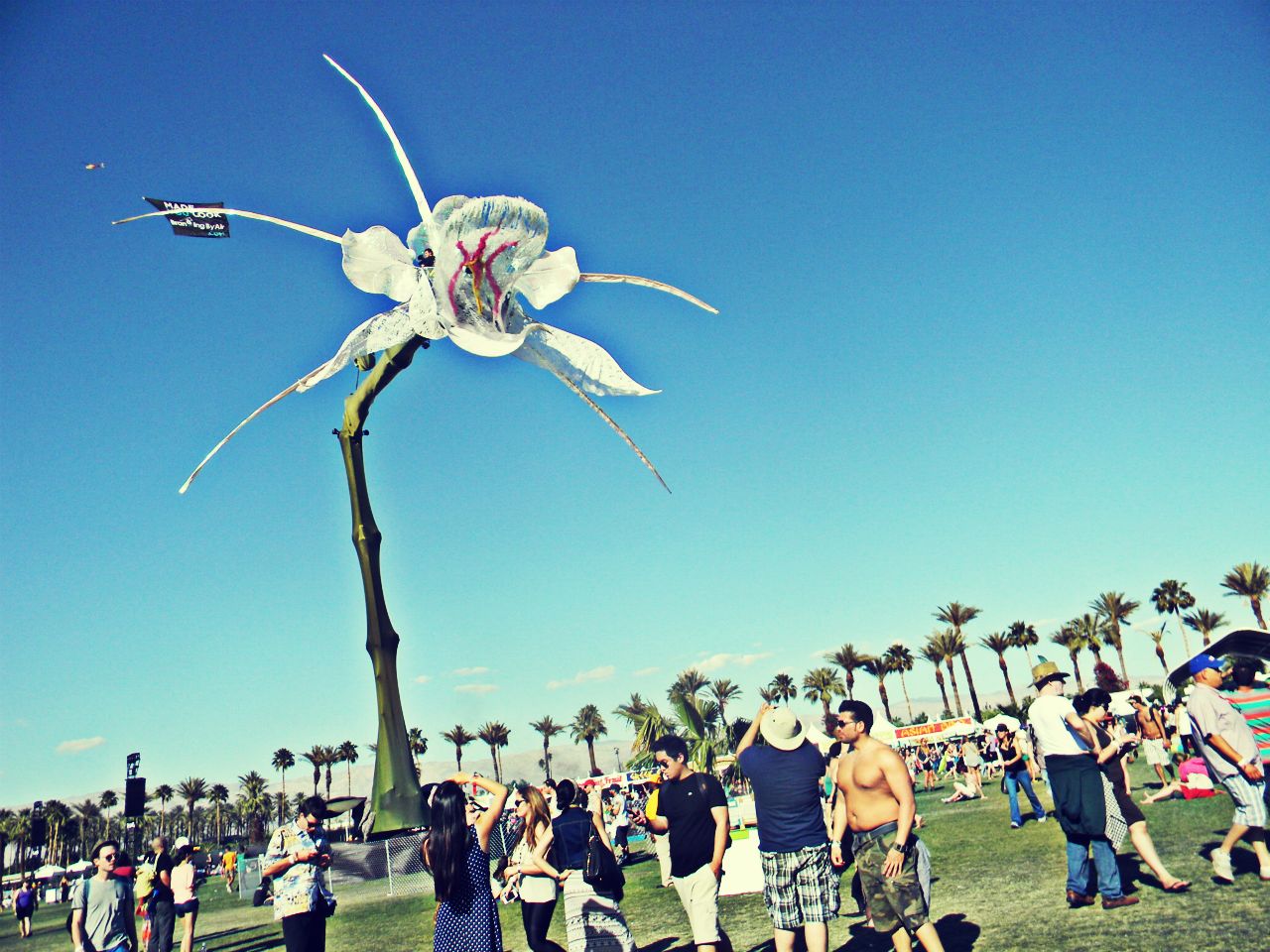
Inside, palm trees are flooded in garish purple light; twisting, blinking constructions burst out of the ground, and concertgoers dance in pits while spraying each other with hoses and listening to tribal chants. A Tyrannosaurus Rex sculpture made from scrap metal and wood stands above the horde, silently watching, jaws lined with rust and frozen in a permanent grin. Thousands and thousands of sweaty, and by Sunday, more-or-less goddamn putrid, human beings flock between five main stages under the unrelenting desert sun (also: Tupac hologram).
No one is here for the sights, though.
Bob is here because he heard Mazzy Star on the radio when he was twelve years old and a year later they became the soundtrack to his life. He put one of their songs on a mixtape for a girl when he was seventeen. Now he’s twenty-three and they’re playing Coachella and oh God he’ll do anything to go and he did and now he’s here.
“Mary” is here because one night she couldn’t sleep and someone sent her a song and the entire world stopped for five minutes. She cried because it was beautiful and now she can finally hear the song in person and now she’s here.
“Chad” is here for sex, drugs, and rock and roll. He’ll end up with a free t-shirt and a headache.
“Tim” is here because he lives in Indio and has nothing better to do.
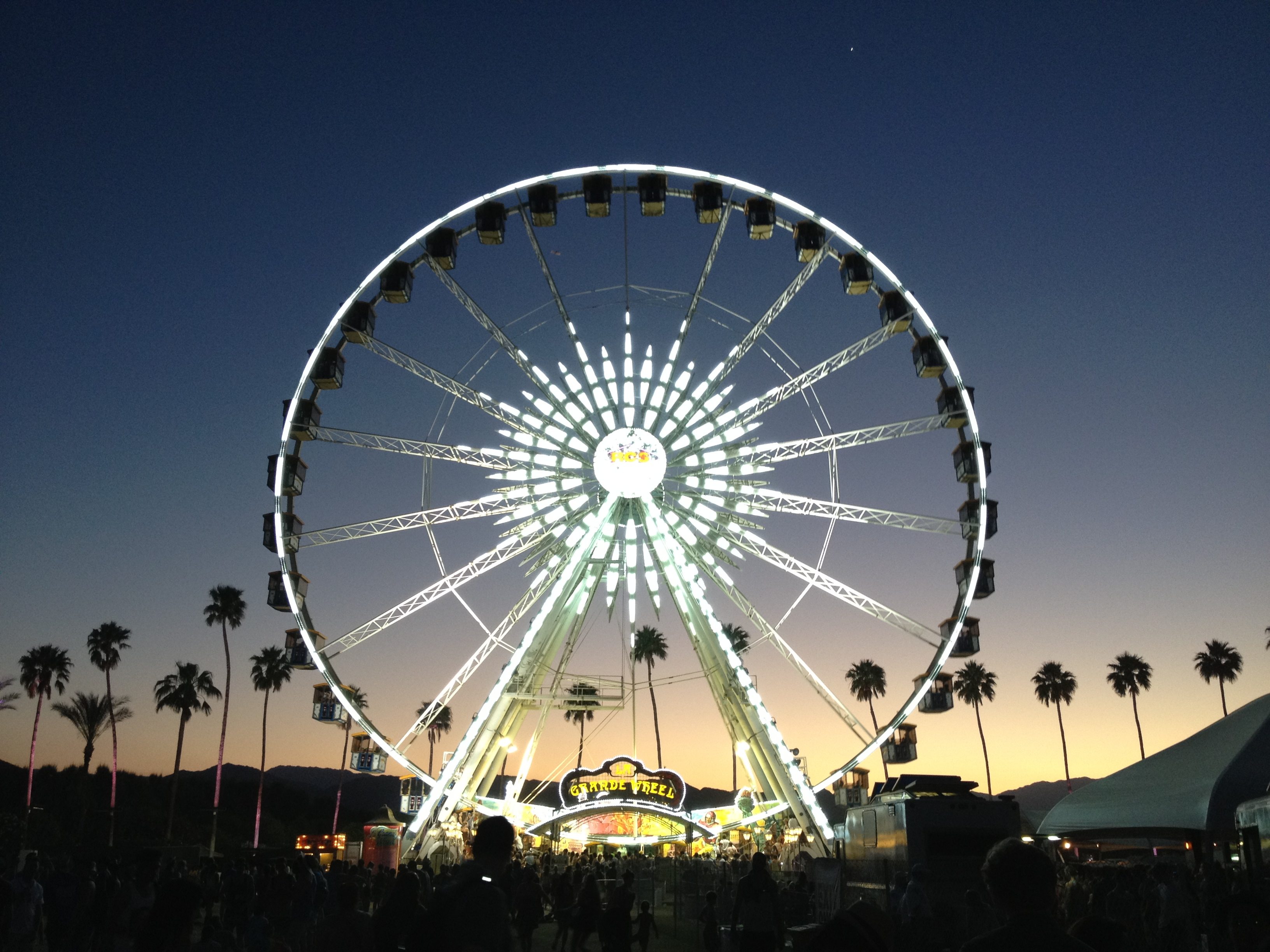
I noticed the ferris wheel first. There’s rarely anyone actually in it, but it looks beautiful, especially when the sun sets and the silhouettes of palm trees fade into the foreground and the lights from the food tents come alive and you’re exhausted and dying of heat and lying in the grass and watching it all happen. I never ended up riding it.
Bob probably hates the security checkpoints and searches. The anticipation and the ever-present sun and the ever-present smell of people’s shit (both definitions) left out in the sun make him dizzy. He has to sit down. He can never scan his wristband the right way and the security guard always gives him a look like, “Christ. Come on,” and has to scan it for him while he stands there with his arm limp and embarrassed. It’s ten in the morning and the people behind him in line are drunk as hell. But finally, Bob and Mary and the men and women and occasional unsuspecting child are released into the wild, free to fend for themselves in the desert.
And so, eighty thousand people pass into the Empire Polo Club daily.
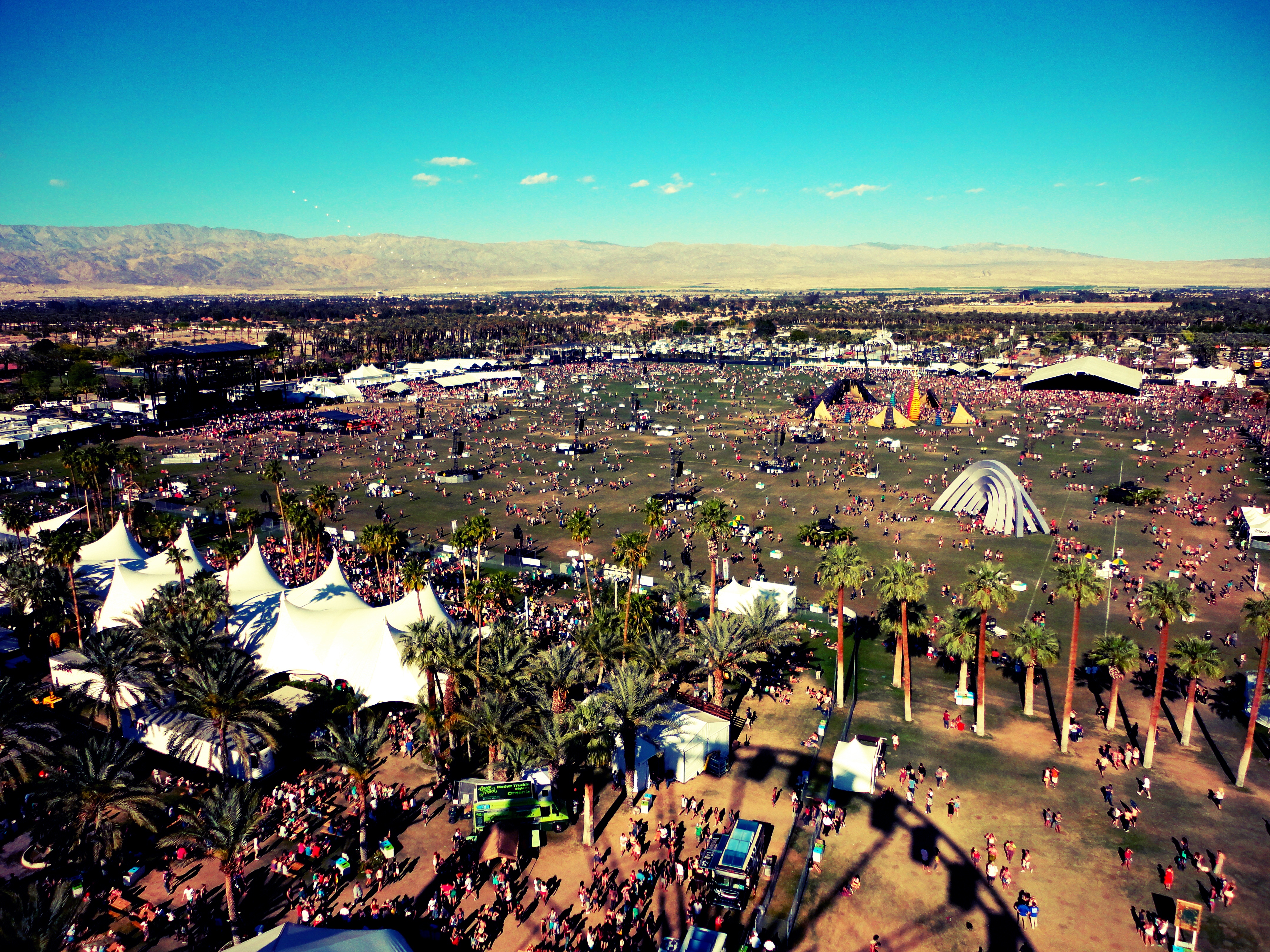
It’s hard to describe how I felt during the time in between entrance and exit. One moment I was pressed up against the VIP barrier in an attempt to get closer to Flylo as “Computer Face//Pure Being” rumbled through the crowd; the next, I was lying in the grass with friends and hearing Radiohead play “Reckoner” and felt aligned with everyone and everything.
It’s hard to describe how I felt. And by the time I started to grasp at the idea, it was past midnight and we were being sent away by security—on the way out, where eighty thousand people move in one massive, gyrating flock, a herd. “Bohemian Rhapsody” can be heard spreading through the crowd. The line never moves because the gates are so narrow and the people get restless, it’s like in an hourglass, there’s nothing you can do to get more grains of sand through, you just have to watch and wait and let it happen but it’s so hot and smells like the drain in your bathroom that you’re always careful not to step on.
Music has a direct path to the “emotive” part of the brain, often bypassing the troublesome “thinking” gateway that we sometimes get caught up in. We form connections with songs we don’t even know the names to. When certain frequencies and amplitudes and waveforms meet our ears, someone slips an ice cube down our spine and we smile or sleep or tear up—instant gratification.
Coachella caters to these basic human desires and instincts. You eat only when you get hungry, you rest only when you can no longer stand, you sleep, you devour the music, and you eat again.
“Fucking animals,” I remember someone muttered as he narrowly dodged a freshly-laid (human) shit on the path.
Objectively, it seemed that very little separated the lucky eighty thousand from animals—covered in sweat and dirt and stains, often stripping, throwing things, breaking things, lining up for things, moving in herds and nurturing our own ingrained desires.
But then, we remember why we’re here.
We’re here because we’re willing to step through other people’s shit, to wear the same clothes for days, to subsist off frosted flakes for lunch and churros for dinner, to sweat and drink and sweat and drink until we feel like kitchen sponges wrung out over used plates—we’re willing to do that to be in a crowd of thousands with balloons flying overhead, smoke and sweat in the air, waiting for that one moment, that single note that Bob and Mary and Chad and Tim know so well, the note that got them through black nights and wasted days. And when it comes, it doesn’t matter whether we’re animals at heart or not. Right then, we find God and our pilgrimage is fulfilled.
-
http://www.facebook.com/people/Samir-Askerov/100000277668918 Samir Askerov