
Visualized spotlights visual artists in the music world.
In this edition, Jake Martin chats with Berlin’s Tonje Thilesen (No Fear of Pop) about her Online/Offline portraiture series, her favorite photo shoots to date, and her newly launched record label.
Where did you get your start as a music photographer?
I’ve always done portraits of my friends, so in a way, that was how it all started. After getting involved with No Fear Of Pop in 2010, my obsession for music evolved, and as I traveled a lot and met friends who at some point have had a major boost in their musical careers, I would take their portraits too. Not because of what band they were in, but because they were my friends who also made music I loved, and I wanted to ‘collect’ their faces as I don’t get to see them everyday. Then of course I go to concerts a lot. A lot. So I would bring my camera and snap a few photos for the fun of it, because the music would inspire me. Well, live photography is definitely not my favourite thing as it is something you see all the time, but I’ve found a way of making it something different for myself. It’s always been for myself. But if you can’t catch the moment just right, a bad photo is still a bad photo, no matter how much abstraction you put into it.
Andy Cary, Snow Wite.
Ben Borden, Solar Year.
Corin Roddick, Purity Ring.
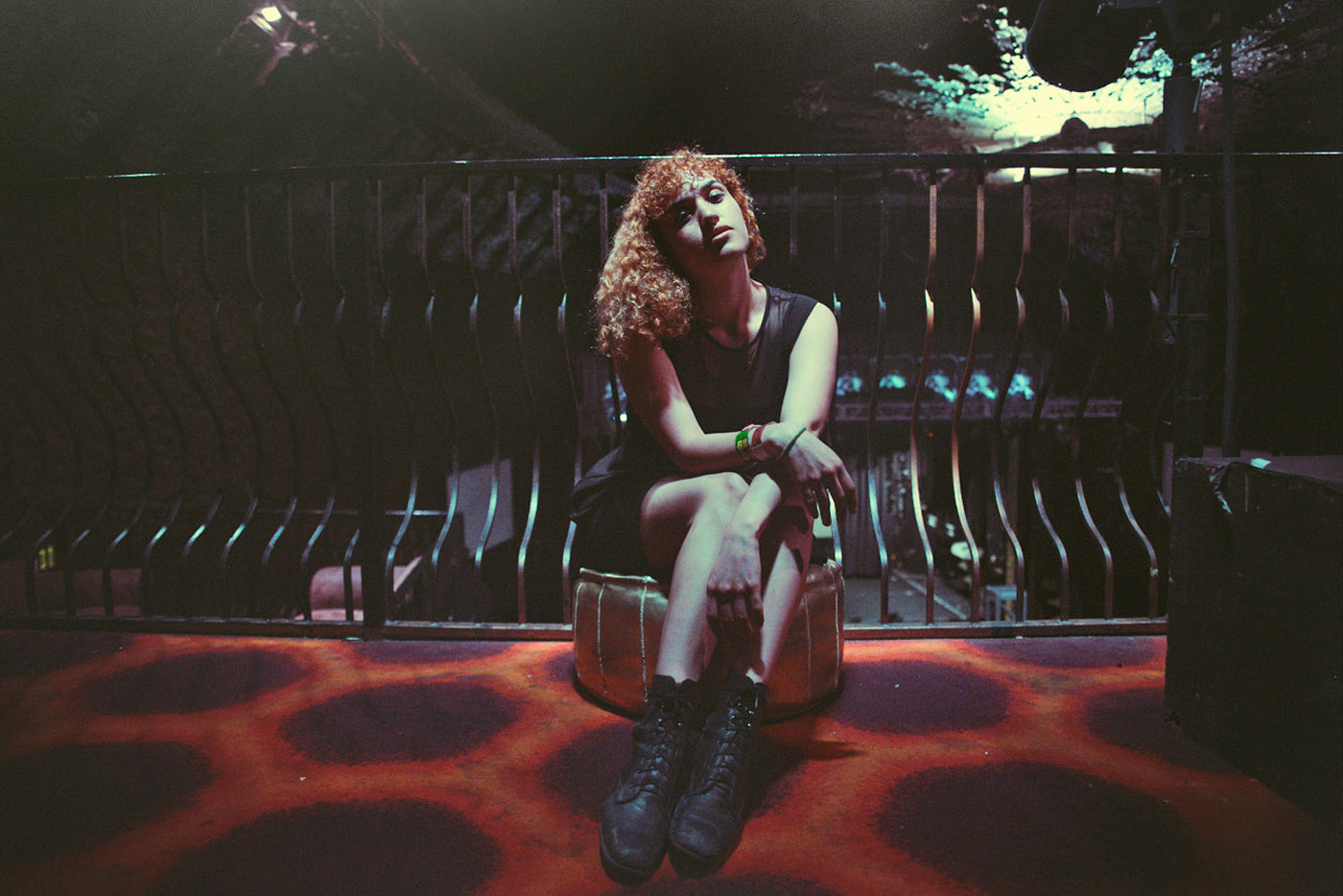
Lorely Mac, Empress Of.
Jon Casey.
Jeremy Malvin, Chrome Sparks.
Is your ‘collection’ of portraits an ongoing series?
Yes, it goes under the (working) title Online/Offline. Last year, I realized I had a nice catalogue of portraits I’ve taken of people I’ve met for the first time in real life, and with this in mind, I figured that I might as well just make it a project. “Online friendships in offline terrains,” something like that. I thought it was a beautiful idea; to set a border between our online interactions and our real, breathing selves, also because most of my very best friends today are people whom I originally met through the internet, usually connected via music. I started taking these portraits at SXSW in 2012, and have continued doing so throughout my recent trips to the US and Canada, last year as well as this year, originally collecting the portraits for a personal gallery. At some point people started asking about it, and whether I was going to publish them in a book or something, and I sort of picked up that idea too. I’m currently working on putting together a photo book slash zine of the portraits, which will be the first out of a few more issues to come.
Iphigenia Fauna, Foie Gras.
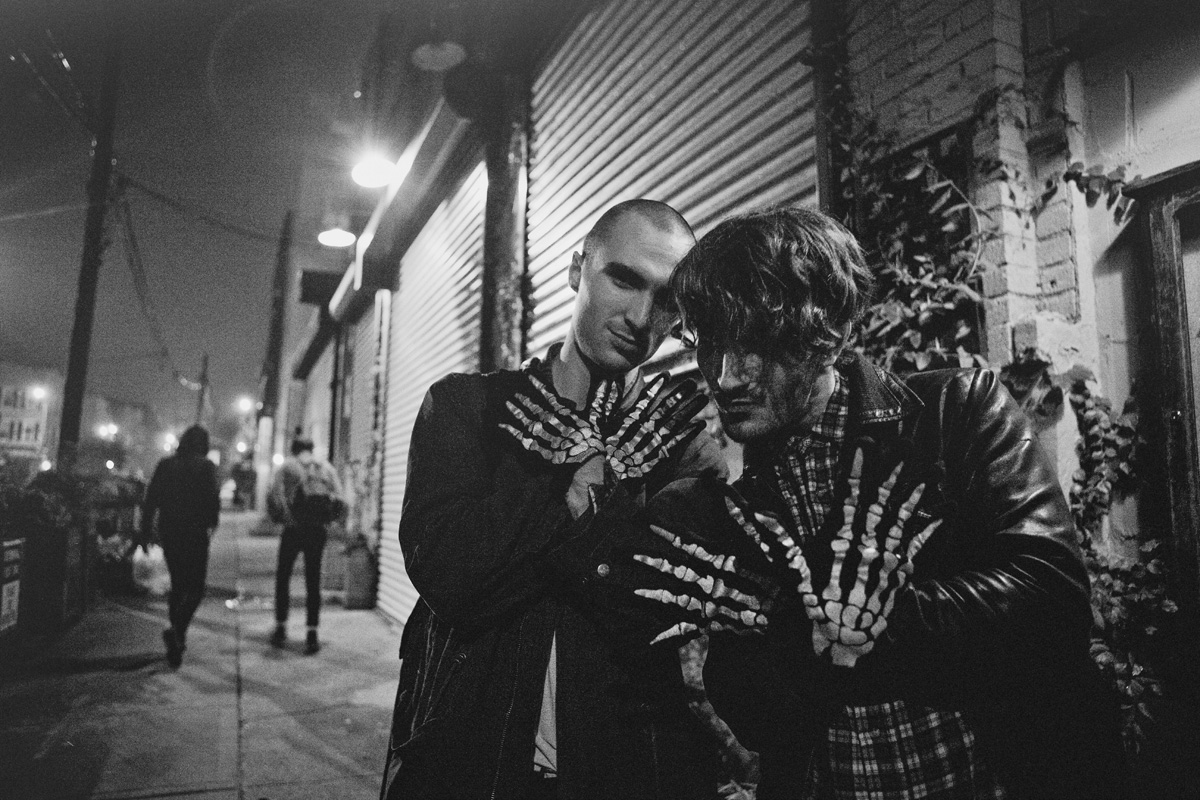
Devon Welsh & Matthew Otto, Majical Cloudz.
Darren Williams, Star Slinger.
Daniel Jones, BlackBlackGold (Gucci Goth).
Noel Heroux, Hooray For Earth.
Ryan Hemsworth.
When do you plan on releasing the series? Will it be pictures-only or will it include behind the scenes information?
Hopefully before the new year. It will mostly be a focus on the portraits, but presented alongside a short blurb from each person portrayed.
What types of musicians do you generally like to shoot? Do you have a preference?
Naturally I would prefer to shoot someone who I know the music of, as that would again give me a certain idea of how I want the photos to come out, or get the certain atmosphere I’m aiming for. I’ve been working for a paper in the past and shot a bunch of politicians and generally a lot of people who were never particularly comfortable in front of the camera, which again taught me a lot about how to interact with the people I shot, even if they were ‘photogenic’ or not. I believe there is always a way of bringing out something in whoever you shoot, but it obviously makes your job a lot easier when you shoot someone with attitude or self confidence, or who knows how to look natural in front of the camera. Shooting a band (that saying, more than two people involved in the photograph) is still a very tricky part for me, as it usually always comes unnatural or awkward. So I’d prefer to shoot one on one, so that they don’t have any friends or band mates to lean back on if they don’t feel comfortable. It is better that way I think.
Can you talk more about the idea of structuring an image around an individuals personality?
I’m honestly really spontaneous, and I’m not gonna lie: I can tend to be really lazy. I don’t want to bother carrying too much equipment around, plan studio shoots or whatnot, that stuff simply bores me and involves too much pre-planning. That said, I do enjoy shooting fashion projects as it is quite exactly the opposite of how I usually work, but I would always just end up hanging out with my models instead, as I’m more interested in their personalities rather than their act of modelling. I like people, and I want to be liked by people, and this I think is the most important approach for me to wrap my head around a person’s personality, by getting to know them, know their strengths and flaws. Not that I have known all these people for a very long time, nor spent a lot of “in real life” moments with them, but I kind of enjoy grabbing bits and tiny pieces of someone’s personality in a short amount of time, for only to build up the puzzle the more time you get to spend with them.
“For me, the subject of the picture is always more important than the picture,” Diane Arbus once put so perfectly, which is also why she’s my biggest inspiration to date. But I don’t think I’m at a point yet where I can call myself a photographer. I still have so much more to learn, and I acknowledge that. I just take photos because I feel like I need to, it feels like a moment is more valuable if it’s captured. But it’s only been an act to satisfy myself, I think. My room is covered with photos I’ve taken from different travels or people I’ve met, and it’s always feels a little bit weird to have people over and expose them to so many memories. It is what it is. My photos are memories, not art.
Alexis Meffert, IZAIO Models.
Alexis Meffert, IZAIO Models.
Aurora Fagerheim.
Alexis Meffert & Dominik Briechle.
Who, out of all the people you’ve shot so far, would you say has the most photogenic personality?
That depends on how you look at it. As for the photo I can say I’m most satisfied with from the series, I think it would be the one I took of 17-year-old Flo Morrissey, making music under the name 9mary. I stumbled upon her SoundCloud a while back through a mutual connection, and was amazed by her piercing voice. At the time she barely had any ‘plays,’ and all of her tracks were only covers of other songs, but her voice so unique and independent. I wrote a few short pieces about her music, and before I knew it she had already connected with mutual internet friends, and suddenly someone I knew back in Oslo had booked her to play his festival. I met her there in December last year when I went over for the weekend, it was painfully cold but the air so clear, and the girl is obviously spellbindingly gorgeous.
Geneva Jacuzzi was also fun to shoot; I love her personality and we had a lot of fun while she was here in Berlin, and I tried reflecting upon that by doing something slightly more psychedelic. She can pull off anything, her natural habitat is in the spotlight, and that helps you a lot when shooting someone.
Flo Morrissey, 9Mary.
Geneva Jacuzzi.
Do you shoot work and non-work photo shoots differently?
I never wanted to make photography a living to be honest. I’d rather work with bands from behind the scenes (in a non-photographic sense), and that is the direction I am heading towards nowadays. But doing photography and design is finally starting to be sustainable for me from a freelance perspective, which is great as it gives me a little extra to put back into my label or other musically related projects I’m working on. Therefore I’d say the working and artistic aspects I do in photography is very amalgamated, as I would never do work which I don’t think is fun, interesting or doesn’t appeal to my musical taste. If I ever end up having to do commercial photography to make a living for myself, I would probably just put my camera down. I hope that won’t happen.
Do you oversee the visual component of your label (Stratosfear)?
Stratosfear had a little downtime after our first release (due to circumstances out of our control), but we finally got upcoming releases in the pipes, and the next one due to August. Stratosfear was also a way of combining our visual and audial passions together, and naturally it has become a playground for me to unfold in, visually speaking. I wanted the visuals to stay abstract and on the border of the processed image and analogue photography. But just as the sound of our label has no other definition than music we enjoy, or perhaps, some sort of ‘future pop,’ the same goes for the visuals. I like the idea of keeping this space as open as possible, allowing ourselves to paint our paths into the canvas.
As a photographer, where do you hope to see yourself in 10 to 15 years?
I don’t know, honestly. Hopefully I’m still traveling and combining photography with music management or writing, but it is also a little bit superficial if you look at it as a life goal. I always wanted to cover more political stories, to travel alongside a journalist and tell the stories of people or political events whose words need to come out in the public. You can only take portraits of successful hipsters for so long until you get tired of it, ha. I definitely hope I can use photography as a tool to tell more important stories, I don’t mind to get my feet dirty. I mean, literally speaking of course.
And lastly, what advice would you give to a beginner photographer?
I still look at myself as a beginning photographer in many ways, although I have been shooting for about six years now. The most important thing is of course to find your own style and atmosphere in the photos you take, and try to avoid thinking about the technical aspect of photography too much. The camera doesn’t matter, really, until you come to a point where you want or need to print your photos in larger sizes. Going from analogue to digital is definitely extremely helpful for the understanding of light, but it doesn’t mean that your photos are gonna turn out better in that sense. And yeah, never hesitate about whether to take a photo or not, just do it. It might just be the best one you’ve ever captured.
Cambodia.
Mekong Delta, Vietnam.
Laos.
Laos.
Muang Ngoi, Laos.
Lumbini, Nepal.
-
http://steffaloo.com/ steffaloo
-
John Haas
-
http://nofearofpop.net Henning