
Conversations is an interview series in which we discuss a specific component of an artists’ work.
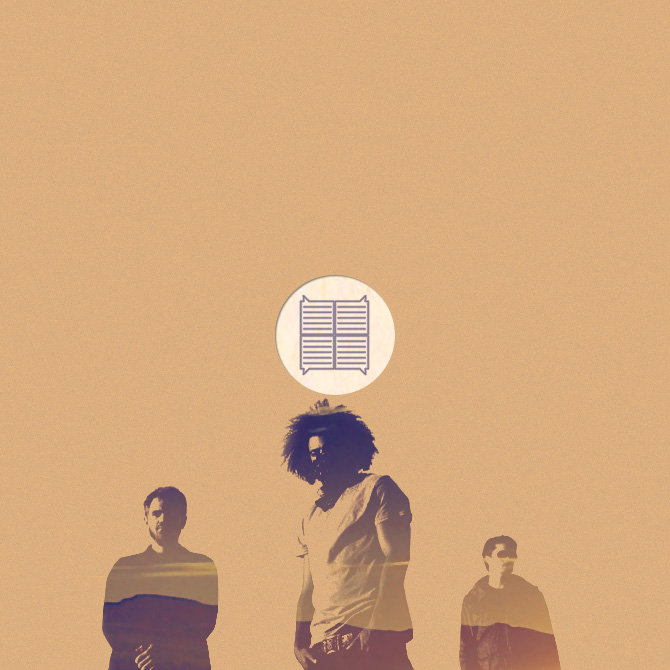
In this edition, Jake Martin chats with Jonathan Snipes (production), William Hutson (production), and Daveed Diggs (vocals) of LA’s self-described “rap group” clipping. about their inception into the hip-hop sphere, being miscategorized as “noise-rap,” and more.
Where did you guys get your start? How did clipping. begin?
JS: Bill and I started doing remixes of existing acapellas in about 2009, mostly just as an exercise. When Daveed moved down to LA we tried one track together, and it worked so well that we haven’t done a remix since.
Were you involved in any music-related projects pre-clipping.?
WH: We’ve all been doing music for a long time now. I have been working in experimental music and noise under a number of different project names for about ten years.
JS: I used to do a project called Captain Ahab—I also write music for film, t.v., and theater under my own name.
DD: I write rap songs as myself.
Can you tell us about your first single as a group? How has it shaped the way you sound today?
JS: The first song we made with all three of us was “Loud” which I think is a pretty unsubtle illustration of the concept—we made a beat out of pretty brutal and typical harsh noise sounds—white noise swells, big metal clangs, super high pitched synthesizer tones, etc. That song was made as if the concept for the whole band was the concept for a single song. We started to figure out a few songs later that we could write songs about anything and with a huge palette of sounds. “Loud” & “guns.up” (the second song) are great, but they’re not very forward thinking—if we’d continued down that path exclusively I think we would have run out of ideas pretty quick.
WH: I like “Loud,” but we recorded it before we’d really had a chance to figure out the lyrical concept for clipping. As a result, it’s the furthest from what we’re trying to accomplish, content-wise. Perhaps, though, the tape on Deathbomb Arc was our first ‘single’? That happened after we’d already made about five or six songs that ended up on Midcity.
DD: Yeah. “Loud” and “guns.up” are frustrating songs for me because I do really like both songs, but I for sure hadn’t figured out the concept yet, lyrically. I’m excited to get enough new songs out there where we can start to phase those 2 out of our show.
Speaking of overall content direction, what is your goal as a group, sound-wise? Has it evolved since the inception of clipping.?
WH: Well, in this context, the words ‘content’ and ‘sound’ seem to refer to two different aspects of the music. But with respect to the first part of your question, I think the content is related to established themes in rap music. We’ve been criticized for having ‘progressive’ beats and, I suppose, ‘regressive’ lyrics—content-wise—but I think an argument could be made for the opposite position. You can go back to Bomb Squad production and some early Dre beats—like “Murder Rap” by Above The Law—that are noisy as hell, and really weird, but the subtler shifts in Diggs’s writing seem more radical to me.
DD: I think it’s important to realize that we never set out to “fix” anything about rap music. We in fact are deeply indebted to the genre as it exists now and historically (as well as many other kinds of music). We reference a lot both sonically and lyrically. But in terms of sound, I think we are always evolving. Each project has a different feel. And that is not something we set out to do intentionally, it just has to do with how we are feeling when we get to working on a particular project.
How important is dba118 (your first release) in the grand scheme of things?
JS: I’m not entirely sure that there is a ‘grand scheme of things’ as far as our releases are concerned. We were asked to do that tape on a Friday when a band dropped out of a batch of three tapes Deathbomb Arc was doing. The tapes were to get shipped for manufacturing on the following Monday, so we made that release in about two days. The song “face” has become the last song we play at all of our concerts.
DD: I’m also a big fan of the song “block” that appears on that release. We don’t usually play it at shows because it kind of drags but it was a big turning point for me in terms of figuring out some of the storytelling possibilities for clipping..
Can you elaborate on your storytelling habits? Do your older lyrics align with your newer lyrics? What kinds of stories do you try to tell?
DD: The kinds of stories are limitless and are determined by the feel of the music. As long as you can cite a rap music reference point it is fair game and rap is kind of like The Bible but more comprehensive; you can find a reference point for everything somewhere.
You straddle—and blur—the lines between noise and hip-hop. How has the reaction to this fusion been from these respective scenes?
WH: To be honest, I think the “Noise-Rap” thing is a little overstated. And it’s partly our fault for going along with it this long. The fact is, we make rap music, not noise. Noise is a genre defined by negatives, by things it’s not—no regular rhythm, no melody, no traditional song structure (verse, chorus, bridge, etc). clipping. songs are songs, they have very rigid song structures, with beats and lyrics and chords. It is true that we borrow a lot of techniques and timbres from noise music, but there’s no real way noise music can ever be blended with another genre and still retain its noisiness. We’re a rap group. I’d say maybe an experimental rap group, but even then I don’t think I like the term. I’m getting a little frustrated with all the hybrid genre names, like Noise Rock— people misuse the the word to mean that their traditional, predictable music has some distorted guitars, or maybe a feedback swell at the end of a track. You wonder if these motherfuckers even listen to Incapacitants.
But to answer your question: we don’t really know. Some noise people like us, others think we’re bullshit. Same for rap fans. At shows, it seems we appeal to people who have really wide-ranging tastes, kids that like all sorts of weird, slightly left-of-center stuff, without any strong devotion to a particular scene or genre. (Although we have been seeing a lot of kids in O.F. hats and shirts lately). Both noise and rap have their orthodoxies, and we don’t adhere to either. The people who like us are the type of people who don’t give a shit about that kind of thing.
You recently signed to Sub Pop Records. Has that changed the way you approach writing music?
WH: Not at all. Sub Pop made themselves very clear: they were signing us because they already liked what we were doing and had no intention of changing us. For us, the only thing that’s been different is that when we approach collaborators, now they take us more seriously than before.
JS: Well, we also have deadlines & expectations now. We do have to turn in a record at some point, which is unusual for us all. We’re more accustomed to working when we want to, and sort of letting the songs trickle along. Having a deadline (and also just really wanting to finish so we can get the record out) means we have to find a balance somewhere between being really inspired and just cranking out songs.
DD: I think we all work well in really intense bursts of action. Plus we all still work on other projects and I am on tour with other projects a lot. So when we do have a chance to all be in the same room it kind of always feels like we are in hustle mode. Then at the end of these extreme moments there is always a point where we step back and say “okay, now do we really love all of these choices we’ve made?” and if not, we go back and fix them.
Speaking of Sub Pop, you guys are fast at work on your proper debut album. What can we expect from this record?
JS: Some unbelievably cool features & guest appearances. Better mixes, higher production value. On Midcity it felt like we took a few songs to figure out what we were even doing. I think we really got it about halfway through that album. If you arranged the songs in chronological order, you would hear a progression and shift. I think the new album is much more coherent—we’ve had more of a clear idea from the start.
DD: I think the world of this album is a little larger than Midcity. It feels a little more expansive.
You guys are about to embark on a vast EU/UK tour. What are your overall goals with this particular tour?
DD: I’m gonna sit this question out because I’m supposed to be on vocal rest.
JS: Really just to get enough sleep and keep Daveed from losing his voice. Just want to make sure our performance can sound as good at it can in a variety of circumstances and places to make sure people who see us actually get a sense of what clipping. is. We’re playing some bigger shows and festivals for us, and I’ll be curious to see how the performance scales up and down. Also, I’m curious to see how we hold together as a group with a more intense travel schedule. It will be a lot of fun. Touring is the best.
Watch the official preview video for clipping.’s tour below: