
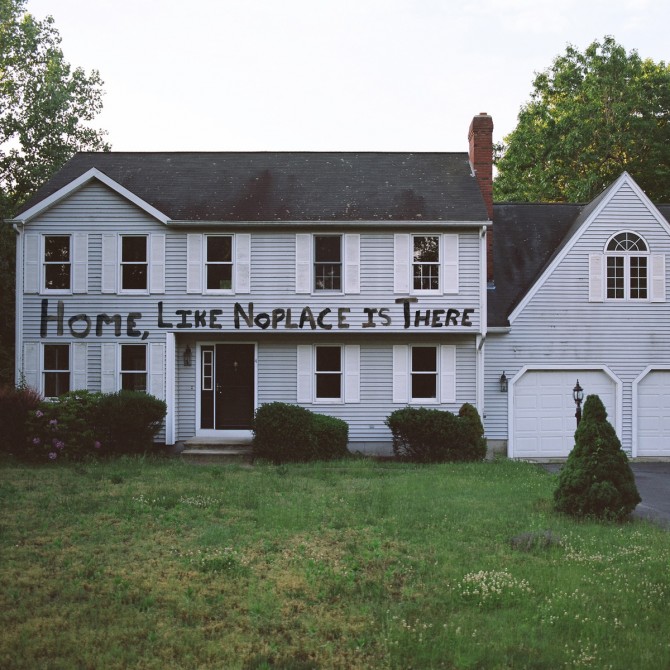
In the past few years, as my listening habits have expanded to include a broader diversity of styles and aesthetics, I have found myself deeply appreciating music that would never have resonated with me before. Through habituation and an increase in contextual knowledge, I am now able to both cerebrally understand and emotionally appreciate genres and traditions that I couldn’t have understood during my halcyon high school days. My music library is now as varied as it’s ever been, and I feel like a better listener for it.
Nevertheless, I believe that retaining reverence for the musical tradition in which you grew up is a crucial aspect of being an honest listener. To some extent, it’s impossible for a fan such as me to escape his musical upbringing. My parents raised me on 1980s college rock—the music of their college years—on CDs played in car stereos and aging LPs that to this day crowd my father’s record shelves in the same New Haven house in which I grew up. Aside from a predictable classic rock phase in middle school, along with a few misdirected attempts at finding a mid-2000s successor to bands such as R.E.M., the music of the 1980s indie rock scene remains an essential part of my identity.
Despite the efforts that I’ve made to broaden my musical perspectives, the bands that have consistently mattered the most to me are those that fit somewhere within this college rock tradition. As I moved on chronologically to Pavement and Weezer and ’90s emo acts such as Sunny Day Real Estate, I responded emotionally in part because I understood where they were coming from—that they were listening to the Replacements as impressionable kids just as I did. Discovering Titus Andronicus in 2010 was particularly huge for me; they were current, in their creative prime, yet still deeply entrenched in a tradition that I believed in.
The Hotelier is the latest band that has inspired and stimulated me in this way. Formerly known as The Hotel Year, the Dudley, Massachusetts quartet plays a brand of bracing, immediate punk rock that demands serious attention and emotional investment. Throughout their shockingly good sophomore LP Home, Like Noplace Is There, frontman Christian Holden virtually never drops out of his passionate upper register, broadcasting his beacon-like voice through the raw mix of guitars and drums with stunning authority. Few bands can achieve this immediacy without being overbearing, but Home, Like Noplace Is There is sequenced so brilliantly that it sidesteps this problem. Although Holden maintains largely the same desperate, hyper-emotive tone throughout the album’s thirty-seven minutes, the rest of the band expands and contracts with the kind of collective agency that only groups with an intensive touring schedule can pull off.
The record’s opening track, appropriately titled “An Introduction To The Album,” remains devoid of percussion for the majority of its four-and-a-half minutes. This allows Holden to air his grievances with a level of sonic—as well as lyrical—clarity that he never reaches again on the album. When he sings, “Open the curtains!”—the album’s first line—it feels truly introductory, a declarative welcome into an insular world that is at once tragic, desperate, and beautiful. The band gradually ramps up their intensity from these initial moments, entering as a unit before “Introduction’s” final verse and refusing to dial back from that point onwards.
Traversing the world of Home, Like Noplace Is There is a reckless journey through a chaotic mess of pulverizing power chords and dense, thorny lyrical territory. Holden traces a thread of discontent, detachment, abuse, and ultimately suicide—although this is never explicitly stated—but grounds these pathos-laden subjects in the brutally evocative perspective of an observer. “I called in sick from your funeral,” he admits on “Your Deep Rest,” among the album’s highlights, “the sight of your family made me feel responsible.” As a lyricist, Holden works best in these small, intensely revelatory moments, and the band recognizes this. On “Your Deep Rest,” everything drops out except guitar and vocals, leaving Holden’s voice and soul laid bare on multiple levels. By contrast, on the album’s centerpiece “Life In Drag”—its most consistently scarred, fractious track—the jagged intensity of the instrumentation seems to force Holden’s already emotive vocals into an even heavier realm of resonance.
Perhaps in part because of “Life In Drag,” as well as the album’s consistently harrowing subject matter, much of the discourse surrounding the Hotelier in light of this album has pegged them as part of the relatively recent emo revival. Emotive energy aside, though, this record bears little in common with progenitors of the revival moment, such as Snowing or Algernon Cadwallader. The guitars are all more or less tuned to standard, the vocals are largely comprehensible and clean, and the songs tend to display a reverence for pop chord progressions and endearing punk rock histrionics. To me, this album seems cut from the same cloth as Titus Andronicus, Sunny Day Real Estate, and all those other great bands going back at least as far as the Replacements. But as much as I love the record because of its place in this tradition of influence, I also love it because of its singularity. Sincere, profound, and perpetually striving onwards in deeply moving desperation, Home, Like Noplace Is There plays, like all great punk rock records, as though this band was the first to ever do it.
Home, Like Noplace Is There is out now via Tiny Engines.