
My parents moved out of my childhood home in central Indiana over Christmas. Our family dog passed away a few days after. A bunch of my records, clothes, and VHS tapes were left in a storage room. They replaced the carpeting in all the rooms and painted the walls. All of the furniture is gone or in their new apartment in the heart of Washington, D.C. I’m continually trying to brainstorm reasons why my dad should hold on to my car. The last time I was in downtown Indianapolis, I drank a beer at a bar that I was never old enough to go to when I lived there. I haven’t been back in a year and a half.
And it’s weird. It’s weird that this is happening. I had safely stowed away an anchor in Middle America, and now it is being gingerly handed back to me. It’s as if to say, “You must make it up for yourself now.” No matter how long I stayed away, I slept with the peace of mind, and the boot-shape state tattooed forgettably on my arm. In the back of my mind, there was always a safe spot in between a Gas America and a cornfield where my childhood best friend and I would drink cherry sodas, chain smoke, and talk about who we loved and who we were going to be.
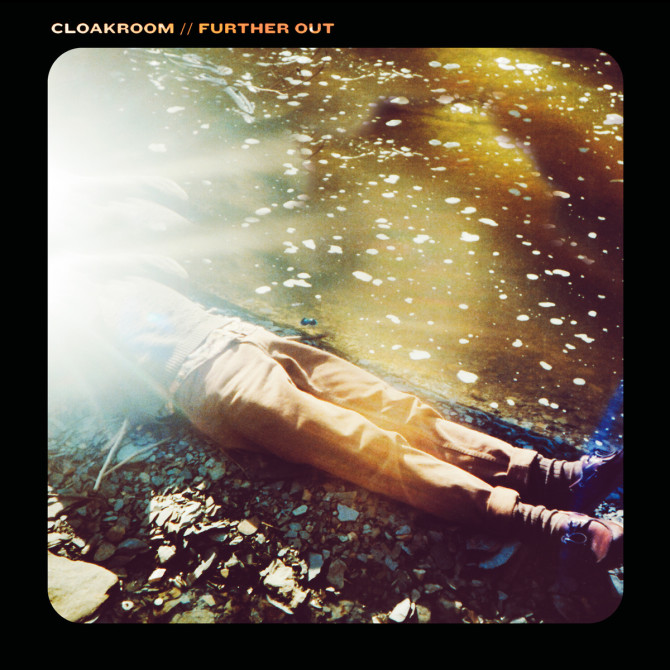
Admittedly, I approached Cloakroom’s new album, Further Out, knowing full well that this was a band of Hoosiers. I contextualized this record as sounding warm, Midwestern, and built a shrine around it before even pressing play. To me, this band sounds like rolling down all the windows and driving by a Kroger. The album melts together, a buttery full sentence hammering out between Doyle Martin’s meandering melodies and the beautiful humming of puncturing guitars. Mixed with my well-meaning, albeit projected nostalgia, each song reads something the apathetically self-aware feeling of returning to a home in the Midwest can bring, like, “No point of destination, sick of self-discovery.”
The opener, “Paperweight,” bumps away with words like horn: “I could dare you to move, but it sounds so dumb.” “It was never my place,” rings on. These simple, stark words come through clearly in waves. Those simmering, greasy guitars blare heavy and unforgiving throughout the record, especially when paired with Martin’s confessional lyrics. But then there are moments when these are traded for light, acoustic sounds, specifically on the instrumental tracks. The album closes with the unrelenting, noisy “Deep Sea Situation,” a striking bookend to this voluminous, emotive record.
A particular line in “Asymmetrical” bludgeons my homeless heart: “I took a long drive, got a few dents.” There were late nights when I was home in college where I’d follow a certain path, a proverbial memory lane. I’d get in the car, and turn right out of my neighborhood. I’d pass the coffee shop I’d walk to, where I’d play my first set, around the bend towards the high school, pass old subdivisions of kids I’ll never speak to again. Then circle around to the main drag of the town. I’d drive up, pass the Target, the Steak ‘n Shake we used to eat at after football games. There was my first crush’s house, and the middle school he and I went to. I sometimes circled this path until my gaslight would turn on. Sometimes I’d get distracted and find myself headed right into the Indy metro area. “Showed yourself out, found your way back, thought you’d never leave the cul-de-sac.” Perhaps I’ll never return to my home state. But if I ever do find myself back on this path, this record would be a most fitting soundtrack.
Further Out is out now via Run For Cover Records.