

Tagged with " MVP"
Most Valuable Play: Xander Harris

 Posted under:
MVP aka Most Valuable Play highlights artists and their favorite records. This week, Austin’s Xander Harris—who recently released a Snow Crash-inspired album—details his adoration for Chris Carter’s The Space Between, one of his go-to aural pleasures.
Chris Carter - ‘The Space Between’
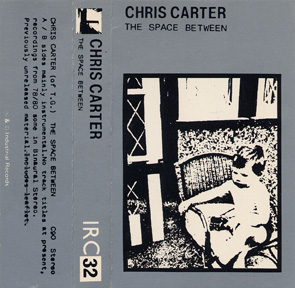
Throbbing Gristle is the discovery of my youth that permanently changed the way I look at music and art. I was working in a record store during my late teens and my boss, George Reed, always preferred to recommend more “extreme” music that he thought I should be listening to. A chain smoking, cackling man who would weave around the store pulling out titles and setting them next to the store record player shouting “you fucking kids don’t have any idea what underground is” while ashes spewed like a mini volcano. George always recommended music to me that quickly would turn into an obsession. He was aware that I was experimenting with noise music but I was only familiar with second generation acts of the genre, like Skinny Puppy, that he was generally critical of. George lent me a copy of Throbbing Gristle‘s ‘D.o.A: The Third and Final Report of Throbbing Gristle‘ and I thoroughly enjoyed every second of that record. There was one swirling dervish of a track on that album that I kept listening to over and over in the store, the track “AB/7A”. “That track’s a Chris Carter solo composition” I heard George mumble over the crest of the volcanic Marlboro smoke. Slyly, he pulled out a zip up case filled with all of the original Industrial Records cassettes that he had purchased through the mail upon first release. This was gazing into the rumored “private stash” and I hardly ever witnessed George bring in rare personal items to the store. A small slate gray square with a weird cover photo of a young child landed in my hand.
“Here, your homework for tonight is to listen to Chris Carter’s ‘The Space Between’”
I went home, popped the cassette into the cassette deck, threw on some headphones, and turned out all of the lights. There was a bit of a 30 second synth intro and then the first track “Beat” started. I was familiar with a few synth artists of the late 70′s and early 80′s but I was very limited in my point of reference. I was not prepared for the weird intro of the mutant squall of “Beat” with driving, fuzzy drum work that pushed the song into compelled head bobbing. Transformed into a weird dystopian landscape, I listened to the hiss to slowly fade in the next track, “Outreach”. “Outreach” is one of those tracks that I instantly fell in love with. It sounded like the car radios playing in the Cloud Cities of my dreams; Vangelis style washed out melodies fighting with the slow motion ballet of the sequencers. The tracks built on each other for what seemed to be as far as the mind could see. I found out later that most of the tracks on the album were improvised jams that Chris Carter wrote while trying to come up with backing material for Throbbing Gristle to build off of. Learning that completely blew my mind and added to the mystery of the release.
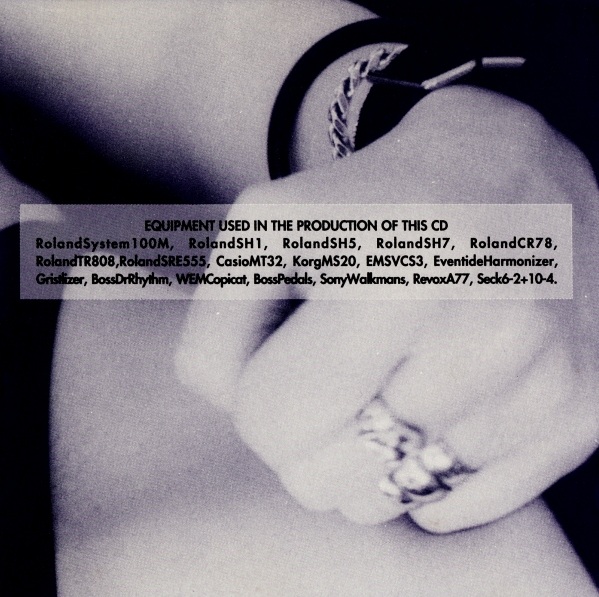
The original cassette release was 90 minutes in length and has never been reissued with the full 90 minutes of content. The best reissued version of the album, in my opinion, is the CD reissue that Mute released in 1991. The other reason I prefer that version is because Chris Carter listed in the insert the gear used to make the record. Recently, a Chris Carter remastered version was released on vinyl by Optimo out of Scotland but it sadly only contains 40 minutes of the original work.
I probably listen to ‘The Space Between’ at least once a week, if not more. Its music that never leaves my head and takes me to that original place of wonderment I had regarding the possibilities of synthesized music. This release is the reason why I started making synthesizer music. The music of Chris Carter, and Throbbing Gristle, was also my introduction to the early days of tape trading culture, a phenomenon that I have been happy to see return with more artists across the world.
Curated by Speaker Snacks.
Most Valuable Play: M. Sage
One’s favorite album is telling. Favorites are deep—often they are connected to certain people or places in our lives and are always closely tied to the memories of the time we’ve spent with them. They are sacred because they are unique to each of us. They are our own. In this installment of MVP (Most Valulable Play), M. Sage tells us about his favorite.
In the beginning of my internet assisted music obsession, around age 14-16, there was a small sect of my friends who utilized a variety of sources to amass an enormous catalog of totally obscure, totally out of our league “underground” music. Brett Taylor (Littoral Drift), Joseph Yonker (Pasture, Willamette) and a bunch of other friends and I would scour the internet for the most esoteric shit we could find, and then share it with each other. We were mutant, Soulseek abusing, CD burning teenage nightmares, and I am so thankful.
Epitonic.com was one of the main channels I used then to discover music in that era…this music would eventually shape the music I make now. I found out about GY!BE, Black Dice, Tortoise, Mercury Program, Havergal, Black Heart Procession…all in the same afternoon. It was overwhelming, and powerful, and I still love so many of the records I came across.
One of the most memorable, important, incredible records I got turned on to thanks to this group of friends, Soulseek chatrooms, and the proto-blog internet, was “Minor Shadows” by the band 1 Mile North.
Sometimes I debate whether or not this band really ever existed in the first place. There is hardly any information on them anywhere on the internet anymore. They have a Facebook page that seems to never get updated. Their website, which was once a beautiful, cryptic, soft-focused dream of a website, is now missing. Their Wikipedia offers about as little information as possible. Their records (only released on CD) are practically impossible to find. Hilariously, people have mistaken a photo of Joseph and I circa 2008 (as Tables & Chairs) as a press photo for 1 Mile North (even their record label?). It seems I was cosmically bound to have a connection with this band through the internet.
Their album ‘Minor Shadows’ was and has been a huge part of me finding my personal niche of ambient music. Their record changed my life, because it changed the way I approached making music. I have been listening to it regularly, probably at least 3 times a month, for the last 10 years. I am in love with it.
1 Mile North is/was a duo: Jon Hills played guitar, loops, some synths and stuff, Mark Bajuk had a huge pile of old analog synths, chord organs, and two really charming dolphin puppet/statues from what I can remember of the photos from their missing website.
They have 2 albums, and both are stunning, but ‘Minor Shadows’ is my favorite by far.
As far as “underground” music goes, this was kind of my introduction to the more DIY side of ambient things. This record helped me understand it was possible to write music that was both oblique but also engaging. Not assuming, but powerful. It wouldn’t fill a room, but could make the room feel less full. Emptier. Their songs usually build up around one rhythmic element that is repeated throughout the tracks. Guitars and synths trade phrases, taking leads or swelling in the background to build beautiful foundations for the other member to play leads over. Some eerie, distant trumpet and saxophone set a hazy mood on a few tracks. Minimal techno elements spring up here or there. Field recordings and samples come in and out, and make for some of the most memorable parts of the album.
Their music feels as academic and cold as it does raw and emotional. It is absent, full of longing, totally hollow. But once you step into the inviting naked space they make, you are enveloped by their sound. It is a sensation I probably won’t ever forget.
1 Mile North is one of the most underrated “post-rock” bands, and a note-worthy predecesor to a lot of the ambient/drone/electronic/bioelectric stuff that is coming out now. Some of Emeralds and OPN stuff reminds me of a more agressive, psychedelic, hard-edged approach to the same ideas 1 Mile North presented years earlier, to very little aplomb. They made one of the touch-stone albums a lot of ambient/electronic musicians seem to not really know about, but accidentally rip-off with less cunning on the regular.
Put on some headphones, lay very still in your bed, and listen to ‘Minor Shadows’ some afternoon. Just let it take you somewhere else. It will make your whole day feel different.
Most Valuable Play: Verb/Re/Verb

This is the first of a new feature called MVP (Most Valuable Play), created to better personalize the tastes of our PORTALS contributors and fellow music lovers. Below read up on Verb/Re/Verb‘s most beloved album and tell us yours in the comments underneath.
…
Through CD skips and shuffling of playlists, my childhood mild case of insomnia brought me to what is now my most valuable album—thank you restlessness. In remedy of my sleep troubles, my childhood lullaby became Aimee Mann’s “I’ve Had It”, and from then sleepless nights became Aimee Mann nights. And fortunately, Aimee Mann days and nights still exist in my life—no longer as a childhood sleeping pill, but as a constituent of what prevails as my most memorable and beloved album (if you could call it that). Now, I’m not sure whether it’s entirely accurate to call this an album, but I will. My most beloved album is a compilation of 11 songs that, for the most part, can be found on Nick Hornby’s Songbook.
Nick Hornby (born in 1957) is an English author, and unknowingly the architect of this favorite album I speak of. Hornby is best known for his novels High Fidelity and About a Boy, but most personally impactful for his collection of 26 essays known as Nick Hornby’s Songbook. The book is composed most simply of stories about songs and the resonance the songs hold with him.
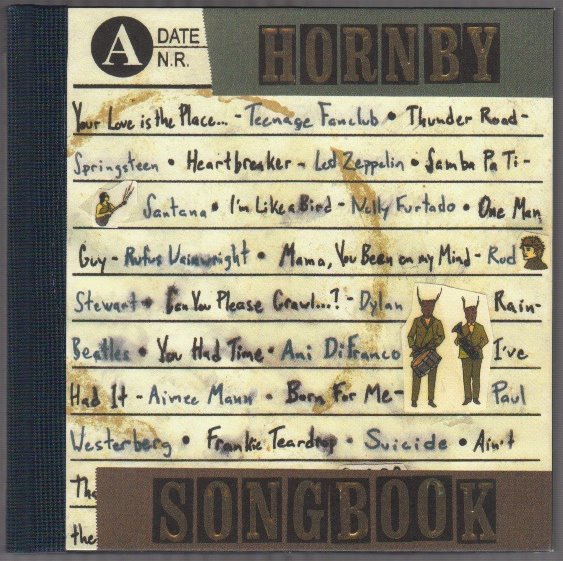
When published, Nick Hornby’s Songbook included a CD of all 26 tracks as to be listened to while reading the essays. The burned version of the CD that was played for me as a child had about half as many songs. The burned and burned again version that sits in my car with a white CD face that reads in Sharpie, “I’ve Had It & …” has even fewer.
Nick Hornby’s Songbook Tracklist:
- Teenage Fanclub — “Your Love Is the Place Where I Come From”
- Bruce Springsteen — “Thunder Road”
- Nelly Furtado — “I’m Like a Bird”
- Led Zeppelin — “Heartbreaker”
- Rufus Wainwright — “One Man Guy”
- Santana — “Samba Pa Ti”
- Rod Stewart — “Mama, You Been on My Mind”
- Bob Dylan — “Can You Please Crawl Out Your Window?” / The Beatles - “Rain”
- Ani DiFranco — “You Had Time” / Aimee Mann - “I’ve Had It”
- Paul Westerberg — “Born for Me”
- Suicide — “Frankie Teardrop” / Teenage Fanclub - “Ain’t That Enough”
- The J. Geils Band — “First I Look at the Purse”
- Ben Folds Five — “Smoke”
- Badly Drawn Boy — “A Minor Incident” (from the About a Boy movie soundtrack)
- The Bible — “Glorybound”
- Van Morrison — “Caravan”
- Butch Hancock and Marce LaCouture — “So I’ll Run”
- Gregory Isaacs — “Puff, the Magic Dragon”
- Ian Dury and the Blockheads — “Reasons to be Cheerful, Part 3″ / Richard and Linda Thompson - “Calvary Cross”
- Jackson Browne — “Late for the Sky”
- Mark Mulcahy — “Hey Self-Defeater”
- The Velvelettes — “Needle in a Haystack”
- O.V. Wright — “Let’s Straighten It Out”
- Röyksopp — “Röyksopp’s Night Out”
- The Avalanches — “Frontier Psychiatrist” / Soulwax - “No Fun” / “Push It”
- Patti Smith Group — “Pissing in a River”
I’ve Had It &… Tracklist:
- Aimee Mann — “I’ve Had It”
- Bob Dylan — “Can You Please Crawl Out Your Window?”
- Patti Smith Group — “Pissing in a River”
- Paul Westerberg — “Born for Me”
- Mark Mulcahy — “Hey Self-Defeater”
- Teenage Fanclub — “Your Love Is the Place Where I Come From”
- Rod Stewart — ”Mama, You Been on My Mind”
- Badly Drawn Boy — ”A Minor Incident”
- Rufus Wainwright — “One Man Guy”
- Ani DiFranco — “You Had Time”
- Teenage Fanclub — “Ain’t That Enough”
When I call I’ve Had It &… my favorite album, I’m referring more truthfully to a collection of skipping and scratching nostalgia that will forever be played, rewound, and remembered, as are all favorites. Favorites are reminders, prompts, and the interminable etchings in our lives. To listen to Nick Hornby’s Songbook in full would be to exaggerate a story, but to listen to I’ve Had It & … with the sand paper scratching hiss when the best Teenage Fanclub track skips the bridge is to preserve my favorite album. Below is the beginning of an unending essay holding my I’ve Had It & … affection.
It began with the far too few nights spent with “I’ve Had It” lulling me to an uninterrupted sleep, followed by the muted underwater listens through decaying outdoor pool speakers, and has continued as the recurring background to my newfound adoration for never-ending unsmooth city streets. I’ve never listened to “I’ve Had It” loud, but quietly and with the subtlety of familiarity, it’s been there. It’s the song I know all the words to, but never care to know what they mean. Mann’s unbinding, mild watered tone leaves me the distance to wander through my own meaning as that changes with me. The whispering percussion, the guitar flourishes that gently suggest a blue after deep blue out the window view, the elevated notes that cause the deeper tones in Mann’s voice to take to the wind, and salty piano that grounds the wandering – the individual sounds themselves, I believe, are unidentifiable memories. It isn’t the mentioned memories tied in tight connection to the song that compose its distinct meaning, but the knowledge that with these sounds as constants, my wandering through this song will feel familiar. The distinction that separates this song from others is just that; that I can wander at a just familiar enough distance.
Badly Drawn Boy — “A Minor Incident”
Sometimes, I play and replay again and again the first seven seconds of this song. To hear the calloused fingers step down each worn string with a hand that I always imagine to be scuffed with utmost experience makes those seven seconds feel more tangible than I’ve ever been able to believe. That sense of palpable travel married with the homely, unscathed, and dependable vocals makes “A Minor Incident” unbinding. It says that neither here nor there is the right place, but at both there will be an extent of safety. And then comes the bit I’ll only play once, the relief I wait for throughout the album, and relish in once it’s too quickly through – the harmonica. The midway sigh, that finishes in nearly danceable rhythm. The passing conversation between the inhale and the exhale at some never forgettable junction, and the relief that comes by passing. As followed by the bottomless guitar plucks that mark the passage, and the exultation that comes like a never before felt wind as the harmonica gusts fervently once more. This is the only song on my CD of the album that doesn’t ever skip, it’s the unswerving, unfailing security that makes all feel like a travel.
I’ll never cease to be intrigued by the sparse, barren, interim space between the thump of the piano. For just over two minutes, the piano remains an unaccompanied commemoration – not a commemoration to anything in particular but applicable to everything. Strung together closely, piggybacking on one another, and then insecurely, waiting for inclusion, these two minutes of unaided pressing of the keys are the only minutes of I’ve Had It & … that I can’t predict. It’s the view out the same window you’ve looked through countless times, but the view that is unpredictable because of time. And then the fingers slide down neck of the falsetto guitar and the unexpected becomes an embraced unforeseen. Until DiFranco’s vocals come in, and her hushed, soar, rugged voice tells a story you’ve seen before. Somehow, just then, time becomes a shared memory, and the isolation of the uninhabited piano keys becomes communal. The individual isn’t any more an individual but one of many, time is collective, and the unforeseen feels common. The harmony brings “You Had Time” to a united seclusion marked again by the same sparse thumps of the keys that feel more familiar than they did before, and less protruding than the first. The unexpectedness that time ensues is more mutual than it’d ever felt.
Teenage Fanclub — “Ain’t That Enough”
‘California independence’ is what I’d call this. “Ain’t That Enough” is the persistent, even if infinitesimal, sunny relief behind smothering California city fog, smog, and mixture of the two. Relative to other songs on this album, “Ain’t That Enough” has gained significance with me as I’ve aged. The song sounds like the sun that makes my steering wheel a black drought stricken desert, the same sun that can never seem to be blocked by those useless panels that narrow street view more than they do conceal abrasive orange light, and the same sun that is likely responsible for the unforgettable skip of the song’s bridge that interrupts the consistency of the hazy guitars with a grin. As Nick Hornby wrote:
It is important that we are occasionally, perhaps even frequently, depressed by books, challenged by films, shocked by paintings, maybe even disturbed by music. But do they have to do all these things all the time? Can’t we let them console, uplift, inspire, move, cheer? … I need somewhere to run to, now more than ever, and songs like “Ain’t That Enough” is where I run.
As a changing, relatively confused, slightly too ambitious teenager, it’s important that this song exists.
These are just 4 of 11 songs that together compose my most valuable play. Individually, I wouldn’t say that these 11 songs are my favorite songs, nor could I call the 11 artists my favorite artists, but as a whole they are valuable. They’re cherished in that they are a comprehensive portrayal of the time I’ve spent with them. They’ve become individualized not because of the memories I’ve connected them with but because they’ve existed through those memories. They aren’t impermanent, passing, or momentary because they’ve accompanied too many moments to be. I haven’t seen even one of the 11 artists in concert, nor do I own a shirt of theirs, or follow them online, and I wouldn’t want to. They are valued because they are individualized, without the association to a persona or character; they are my own character, my individual experiences, and permanent for that internal reason.
What’s your most valuable play?